
Every memory care resident in Moore County now has access to personalized therapeutic music thanks to a collaboration between a local Girl Scout, community donors Vivian Jacobson and Stephanie Hillard, and The Engaged Brains Project, a three-year initiative sponsored by The Foundation of FirstHealth and led by neuropsychologist Dr. Karen D. Sullivan.
The Music Is Medicine program delivered music headphones to 198 residents and 11 music players with CDs to Moore County memory care facilities, bringing the proven benefits of therapeutic music directly to those living with dementia/brain change. The music players were loaded with customized playlists, ranging from early classics like “You Are My Sunshine” and “Hound Dog” to Motown anthems and joyful favorites, and quieter, reflective songs such as “Lean on Me.”
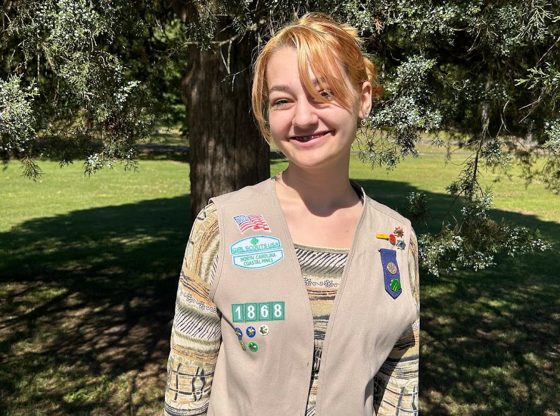
The initiative served as the Girl Scouts Gold Award project for Pinecrest senior Kenna Johnson, who organized and led the headphone deliveries alongside her mother, Bridget Johnson, donor Stephanie Hillard, and Engaged Brains Project Champions Lori Lee, Kelly Reynolds and Rev. Sue Hudson. The Gold Award is the highest achievement in Girl Scouting, requiring scouts to identify a community need and implement a sustainable solution that creates lasting change. Only 5 percent of eligible Girl Scouts earn this prestigious honor.
“This project connects two things I care deeply about: music and taking care of others,” Kenna Johnson said. “When I saw the impact music had on folks who are sometimes overlooked in our community, I felt empowered to make a change. Working alongside Dr. Sullivan and her Engaged Brains champions gave me the motivation to ensure every memory care resident had what they needed. Learning that I can make this big of a change has been empowering and shows what one Girl Scout can do.”
Sullivan and Johnson collaborated on the program over the course of a year, which included two community showings of the documentary “Alive Inside,” one at the Senior Enrichment Center and one at Pinehurst United Methodist Church, and a Zoom meeting with Dan Cohen, founder of Right to Music and the visionary who introduced the world to music as medicine through the award-winning film.
“Music has an uncanny ability to reach people with brain change in ways that other therapies cannot,” Sullivan said in a press release. “When someone hears a song from their past, it can unlock memories, reduce anxiety, and bring moments of joy, connection, and even identity. Thanks to Kenna and our generous sponsors and champions, every memory care resident in Moore County can now experience these benefits.”
“I am so proud of Kenna, a 17-year young person who was moved to be involved with a positive, person-centered intervention for her elder neighbors,” Sullivan added. “She approached the project with a lot of enthusiasm and motivation to have an impact, and she is a great example for her peers.”
Research has consistently demonstrated that personalized music can improve mood and enhance quality of life for people living with all forms of dementia, said Sullivan. Personal headphones create an immersive experience that maximizes therapeutic benefit.
“I was elated how most residents immediately reacted positively to the music they heard once the headphones were placed over their ears,” said Lee, who also made these meaningful deliveries as part of her service with The Engaged Brains Project.
“Some started humming, others stomped their feet. Some started crying, saying they were hearing beautiful music, while others began singing, snapping their fingers and moving their arms. One active resident burst out singing, ‘I’m all shook up’ at the top of her lungs, as she walked away with the headphones playing an Elvis favorite. This moving experience validated to me that those living with brain change are not lost but need opportunities to stay engaged in activities that activate their memories.”
Playlists were customized for the ages of the residents, with songs curated to support the processing of all emotions, not just happiness.
“Music isn’t just there to lift their spirits,” Sullivan added. “It is there to offer a bridge to emotional processing of all kinds. Their sorrows and grief are just as real as yours or mine, and they need a way to organize and express those feelings. Even though cognition declines in dementia, what we’ve been preaching throughout The Engaged Brains Project is that many other aspects of the self remain. These include emotions and music appreciation. We just need to be motivated to find the keys that open their doors.”
Want Moore news that matters? Please click here to sign up for the free Sandhills Sentinel e-newsletter.
Contributed article/photo.