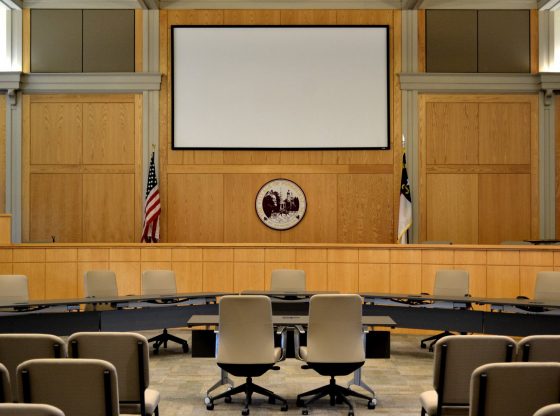


At a recent meeting on Dec. 8, the Aberdeen Board of Commissioners discussed a full agenda of items over a span of nearly three hours. Notably, the commissioners reviewed a detailed water, sewer, and stormwater capacity briefing; ultimately postponed action on a proposed Highway 5 corridor overlay after property owners raised concerns; and expanded operating hours for the downtown social district.
Water, Sewer, and Stormwater Management
The board received a broad update from LKC Engineering, which has been studying how approved housing projects and population increases will strain the town’s utilities over the next two decades.
Engineers briefed commissioners on system capacity, noting Aberdeen’s wells currently produce about 2 million gallons of water per day, while customer demand averages roughly 1.1 million gallons per day, excluding interconnect sales to Moore County.
Engineers also flagged Moore County’s draw on Aberdeen’s system, noting that the county frequently exceeds its daily limit under an existing agreement. County use could sunset in 2026, but it remains a factor in long-term planning.
Consultants highlighted pressure‑zone imbalances, the loss of two wells to contamination, and the need to identify new well sites and consider treatment options to bring compromised wells back online. Upgrades such as the Bethesda Road line and booster station improvements would help move water between zones to meet growth.
To keep pace with development, LKC identified potential sites for new wells along N.C. 5 and U.S. 15-501. Public Works Director Joe Wood said past groundwater contamination forced two wells offline years ago and that test wells don’t always produce enough to justify new construction.
Commissioners also heard brief updates on the town’s sewer system, which averaged about 950,000 gallons per day this year, and on stormwater trouble spots. One of the most persistent issues is recurrent flooding on Atrium Street near the Planet Fitness site, which is a long-standing problem complicated by private property and state road jurisdiction.
Staff presented two approaches: a near‑term, roughly $110,000 project to redirect part of the flow across Johnson Street (contingent on DOT encroachment approval and private easements), and a comprehensive upgrade exceeding $2 million to enlarge downstream pipes behind the Best Buy/PetSmart corridor to the Columbus outlet. DOT has signaled it will not issue an encroachment unless a stormwater agreement is in place with the shopping center owner.
Highway 5 Priority Corridor
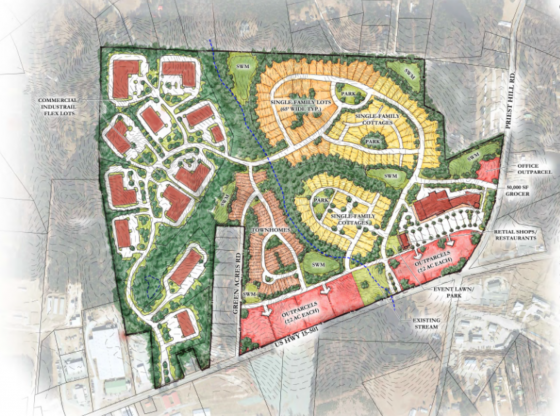
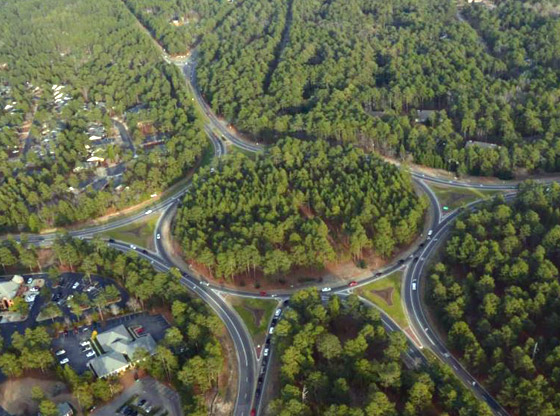
Commissioners kept the public hearing open on applying a newly adopted Highway 5 Priority Corridor overlay to properties along N.C. 5, seeking additional stakeholder input in January before voting.
According to the official memorandum presented by the town, the overlay is “intended to create regulations that enhance the quality and compatibility of development, establish a harmonious design language to guide development along the corridor, and accommodate growth and redevelopment while respecting the varying conditions along the corridor and the desired compatibility with neighborhoods and uses adjacent to the corridor.”
The overlay, adopted earlier this year for future growth areas, would impose stricter design rules along N.C. Highway 5, which is slated for expansion to four lanes. The proposal includes increasing building and parking setbacks from 25 feet to 50 feet, adding landscaping requirements, and limiting driveway access to reduce congestion.
The board said the changes will help to preserve tree canopy, improve aesthetics, and manage traffic as the corridor becomes a major gateway between communities.
However, local Aberdeen residents were unhappy and felt that the public had not been sufficiently notified, leading to a lack of proper input. A motion was made accordingly to suspend the public hearing and reschedule it to the January meeting, to “give land owners a chance to come discuss the project.”
The board directed staff to meet with landowners and return with potential amendments that preserve the plan’s goals while offering flexible compliance pathways.
Updates and Upcoming Events
Earlier in the evening, three officials took the oath of office: Mayor Robert Farrell and commissioners Timothy Helms and Fallon Brewington.
Helms was subsequently appointed and sworn in as mayor pro tem.
The board recognized outgoing Commissioner Wilma Laney for eight years of service and commended her leadership on affordable housing, the new library, and responsible growth.
Farrell later lamented a roughly 11% voter turnout in November’s municipal election, calling it “not acceptable” and urging greater civic participation.
In other business, the board approved expanding the municipal social district’s active days to Monday through Saturday, 11 a.m. to 11 p.m., with Sunday remaining 1 p.m. to 9 p.m. The effective date is Jan. 19, 2026, to allow time to update boundary signage and notify ABC permittees.
Downtown Planner Lindy Lamille reported no incidents since the district’s launch and said businesses and the public provided favorable feedback during a nine‑month review.
During the manager’s report, staff announced the fire department dinner, said the new library’s opening timeline has shifted to mid‑January, and previewed a busy Saturday that includes the town’s Christmas parade.
Abegail Murphy | Assistant Editor
Article and photo by Sandhills Sentinel Assistant Editor Abegail Murphy. Abegail has been writing for Sandhills Sentinel since 2021.
Want Moore news that matters? Please click here to sign up for the free Sandhills Sentinel e-newsletter.
Follow Sandhills Sentinel: Facebook | X | Instagram | YouTube | TikTok | Threads | Newsletter