

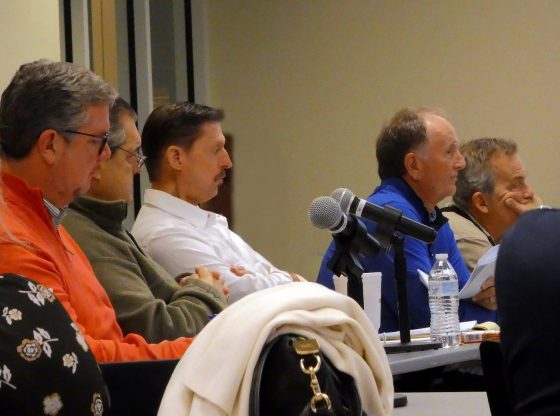
The Moore County Board of Commissioners and the Moore County Planning Board convened on Wednesday and Thursday to discuss the county’s new Land Use Plan as the project nears completion.
“The goals, recommendations, and actions outlined in this plan represent a shared responsibility among county leaders, departments, and community stakeholders,” describes the plan. “Together, they establish a strong foundation for managing proactively while identifying key areas that require further action and ongoing coordination.”
According to the plan, Moore County has experienced a steady annual growth rate of approximately 2%, placing it on track to reach an estimated population of 170,000 by the year 2050.
Addressing the anticipated growth, the plan notes, “By adopting and implementing these recommendations, Moore County will be better positioned to manage growth thoughtfully, protect its natural resources, and preserve the quality of life that makes it a desirable place to live, work, and visit.”
Overview
The plan comprises 10 chapters, with the first six focused on updated county information and the final four outlining future policy, land use categories, and definitions. Over the course of the two meetings, the commissioners reviewed the most recent and finalized version of the Land Use Plan. Commissioners were able to make suggestions and strike content from the plan entirely.
Throughout the document, the draft outlines several recommendations, including directing growth to areas with existing or planned infrastructure, coordinating transportation planning with state and local agencies, and addressing the county’s housing needs. Separate plans are additionally being drafted for the county’s growing water and utility needs.
Other recommendations call for stronger collaboration between county departments, municipalities, schools, and the healthcare community, though the commissioners ensured that the verbiage was kept flexible enough to allow these entities their own autonomy.
Commissioners also discussed strategies for public involvement, though a proposal to use social media for two-way communication was dropped from the plan due to legal concerns. They decided to instead continue holding public meetings that allow residents to address the commissioners publicly and directly.
Districts and Growth
Chapter 9 of the plan delineates the creation of several different “districts” designed to guide growth while protecting each district’s defining characteristics. The assorted districts focus on blends of residential, agricultural, conservational, equestrian, industrial, small town, and highway zoning.
“The committee spent considerable time discussing what makes Moore County special,” explains the plan. “The consensus was that our rural landscape and our small towns define who we are.”
Housing was another focus, with the plan originally calling for more affordable options. The commissioners, however, found the verbiage vague.
“We want to have affordable housing across the county, but how do you define that?” asked Commissioner Tom Adams. “This isn’t about zoning, it’s about trying to provide housing.”
Commissioner Jim Von Canon, an outspoken advocate for affordable and workforce housing, concurred. With no clear definition of “affordable housing” available, the commissioners worried that the plan would be hard to implement in terms of planning and zoning.
Many of the affordable housing conditions were struck from the Land Use Plan, allowing more planning and flexibility in the future.
Unforeseen Setbacks
However, after nine months of work from the Steering Committee, many parts of the plan have been placed on hold or omitted due to recent changes in North Carolina legislation, which impacted several parts of the plan.
The commissioners have repeatedly attempted to make contact with officials regarding the cause for these changes, and even created an official resolution in opposition of these changes in which they requested an exemption on behalf of Moore County.
Within this resolution, the commissioners write that the changes to downzoning laws “limit the authority of local governments to regulate land use and development and diminishes its ability to operate effectively.”
Though a solution has not yet been found, Commissioner Nick Picerno reiterated several times that all the changes made have been made in the best interest of the citizens of Moore County, and many of the proposals within the plan come from the citizens themselves.
Moving Forward
As the meeting drew to a close, the commissioners thanked all participants who saw the plan through to fruition over the last nine months.
“The community showed up, we had hundreds of people, and it’s amazing to see how this process works,” said Chairman Commissioner Kurt Cook. “It’s great that we can all get together when we all have our own opinions and inputs—it’s fascinating. I can’t thank everyone involved enough for your devotion and dedication to not only this plan, but to the enrichment and betterment of Moore County.”
Prior to a final vote in October, the commissioners hope to hold a few more work sessions to refine the plan. The timeline calls for the planning board to review the draft Oct. 2, followed by a public hearing Oct. 21. Commissioners are expected to vote on adoption by Oct. 31.
Want Moore news that matters? Please click here to sign up for the free Sandhills Sentinel e-newsletter.
~ Article and photo by Sandhills Sentinel Assistant Editor Abegail Murphy. Abegail has been writing for Sandhills Sentinel since 2021.









Comments
Comments are closed.