

The Moore County Board of Commissioners once again worked through a wide slate of growth, infrastructure, and public‑safety decisions during a recent meeting on March 3.
Among other agenda items, commissioners upheld earlier conditions for the Holly Grove Pines subdivision, advanced a major water‑supply evaluation for the Crystal Lake–Little River area, authorized more than $1 million in transit vehicle purchases through federal and state grants, and moved forward with funding for a new forensic facility for the Sheriff’s Office.
A Deeper Evaluation of Potential Water Sources
After minimal discussion, the commissioners voted to award a contract to LKC Engineering, PLLC to evaluate the proposed Crystal Lake/Little River water supply alternative.
Public Works Director Brian Patnode told commissioners the county previously conducted an initial review of the Crystal Lake option and determined it could be a feasible long-term water source. The county then issued a request for qualifications, which closed Feb. 3.
Four firms submitted proposals and were interviewed by a staff selection committee. LKC Engineering was ranked as the most qualified to move the project into its next phase.
The firm will prepare a preliminary engineering report at the 10% design level. The work will include additional surveying, topographical analysis, evaluation of the reservoir’s safe yield, and preliminary design of intake structures and a potential water treatment plant.
Patnode said the goal is to complete the analysis before June in order to determine the project’s viability.
Commissioners also discussed project funding. While the evaluation was initially expected to be paid through the county’s public utilities engineering services account, officials plan to establish a new Crystal Lake capital project fund, which will be presented at the next board meeting along with a finalized contract and negotiated fee.
The cost of the contract is currently predicted to exceed $50,000—the statutory threshold requiring a qualifications-based selection process—and could approach $100,000. The exact scope and fee will be negotiated and brought back to the board for approval.
Forensic Facility Funded
Moving on, the commissioners approved a budget amendment transferring $4 million to support construction of a new sheriff’s forensic facility.
Finance Director Caroline Xiong said the funds will be moved from the county’s General Fund to the Sheriff Forensic Facility Capital Project Fund (Fund 438), which commissioners established in September 2025.
The transfer will be funded through limited obligation bond proceeds previously tied to the county’s courthouse project. The county was reimbursed $2,248,700 for interest payments made during courthouse construction and later drew down an additional $673,525 for a debt payment made Dec. 1, 2025. The remaining $1,077,775 will be transferred after the county receives reimbursement for its next courthouse-related debt payment, scheduled for June 1, 2026.
Xiong clarified that the bond proceeds were drawn down based on courthouse debt payments already made, not for new construction related to the forensic facility. Once reimbursed, the funds were placed in the General Fund and are now being transferred to the new capital project.
Chair Nick Picerno asked whether bond counsel had raised any legal concerns about using limited obligation bond proceeds for a facility separate from the courthouse. Xiong said there were no issues, noting that such bonds may be used for public-purpose capital projects.
The new forensic facility will expand the county’s ability to process DNA evidence, conduct toxicology testing to expedite DWI cases, and analyze vehicles and electronic evidence. The project will reportedly not only benefit Moore County but also the surrounding region, and the department has consulted with other agencies, including Union County and state investigators, while planning the facility.
Commissioners also discussed designing the building with room for future expansion.
The board approved the budget amendment unanimously.
Going Places: New Vehicles Approved
Additionally, the commissioners approved contracts to purchase replacement vans for Moore County Transportation Services as part of the county’s FY2026 Bus and Bus Facility Grant Program award.
Commissioners first approved the purchase of three Light Transit Vehicles, or LTVs, equipped with wheelchair lifts at a cost of $337,543.83. Additional expenses, including 3% taxes totaling $10,126.31, insurance of $6,989.43, tags, decals, and camera removal and installation, bring the total cost for the three vehicles to $357,641.57.
Transportation Director Sonia Biggs said the vans will replace vehicles that have exceeded their useful life. The county received a $1,149,110 grant award for the program, which includes funding for seven transit vans and three LTV vans, along with related expenses. The grant is funded 80% by federal dollars ($919,288), 10% by the state ($114,911), and requires a 10% local match of $114,911.
Biggs said the local match will be paid through contract user fees, not county tax dollars. The county will initially outlay the full amount and be reimbursed for the federal and state portions.
Commissioners also approved the purchase of seven additional transit vans with lifts at a contract cost of $724,750.32. Associated costs—including $21,742.51 in taxes, $16,308.67 in insurance, tags, decals, and camera equipment—total $45,009.18, bringing the total cost for those vehicles to $769,759.50.
The board unanimously approved both motions.
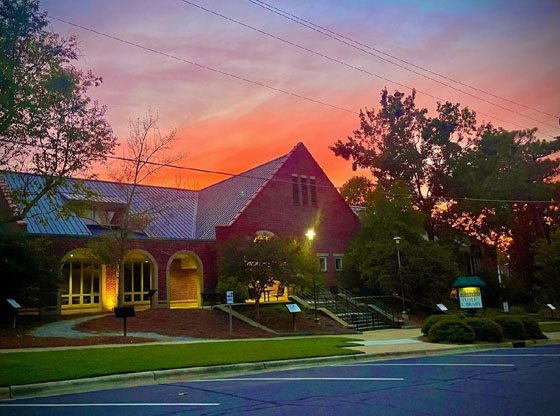
Feature photo by Sandhills Sentinel reporter Daniel Gwyn.
Abegail Murphy | Assistant Editor
Article by Sandhills Sentinel assistant editor Abegail Murphy. Abegail has been writing for Sandhills Sentinel since 2021.
Want Moore news that matters? Please click here to sign up for the free Sandhills Sentinel e-newsletter.
Follow Sandhills Sentinel: Facebook | X | Instagram | YouTube | TikTok | Threads | Newsletter