
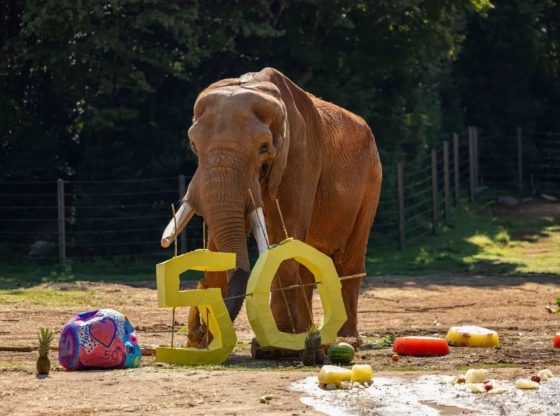
The North Carolina Zoo is mourning the death of C’sar, the zoo’s longest-tenured resident and the oldest African bull elephant in the United States. C’sar passed peacefully on Dec. 19 under the attentive care of a dedicated team of experts, who had been closely monitoring his health as age-related conditions progressed. He was 51 years old.
Orphaned in Kenya, C’sar arrived at the North Carolina Zoo on July 25, 1978, at around four years old. He was the 27th animal resident to join the zoo, and its first elephant. Over five decades of life, he became an iconic figure and a steady source of inspiration for multiple generations of zoo guests. While the North Carolina Zoo had hoped for C’sar to breed, he did not produce any offspring during his lifetime.
“C’sar was a living piece of history and a beloved member of our zoo community,” says Diane Villa, interim director of the North Carolina Zoo. “His gentle presence and remarkable story introduced millions of guests to the wonder of wildlife and the importance of conservation. We are grateful to every staff member, past and present, who devoted their time, expertise, and hearts to caring for him. His longevity is a testament to the love and quality of care he received throughout his life.”
Despite facing several age-related medical challenges as he grew older, including arthritis and declining vision, C’sar lived a full and enriched life thanks to innovative care, positive reinforcement training, and the unwavering dedication of his keeper team. In 2011, he made history as the first elephant in the world to undergo successful cataract surgery and later became the first to receive custom-fitted contact lenses. As he aged, C’sar benefited from other innovative care techniques, such as participating in yoga several times a week to maintain strength, balance, and flexibility for optimum health.
“Meeting C’sar up close and getting the chance to feed him was a highlight in my first year in this role,” said N.C. Department of Natural and Cultural Resources Secretary Pamela B. Cashwell. “Not only did C’sar bring joy to visitors for decades, but he embodied everything that is wonderful about the North Carolina Zoo: conservation, education, and phenomenal animal care. We will miss him, and our thoughts are with his keepers, Zoo employees, and all those who loved him.”
C’sar’s legacy extends far beyond Asheboro. He served as a global ambassador for African elephants, representing an endangered species that remains vulnerable in the wild due in part to poaching, habitat loss, and human-elephant conflict. His story elevated the zoo’s conservation leadership, including its decades-long efforts in West Africa to protect wild elephant populations through satellite tracking collars, anti-poaching initiatives, and community-based conservation strategies.
“C’sar helped people understand why conservation matters,” said Rich Bergl, deputy director and chief mission officer of the zoo. “Because of him, guests have felt a personal connection to the challenges faced by wild elephants, and have seen how we all have a role to play in ensuring the survival of elephants and other wild species. He was truly an inspirational animal and will be missed.”
The zoo will be planning opportunities for the community to honor C’sar’s memory, and details will be shared in the coming weeks. In the meantime, the zoo is asking the public to join them in celebrating a life that touched so many and helped advance the care and protection of elephants worldwide.
Donations to The C’sar Legacy Fund can be made through the NC Zoo Society at https://www.nczoo.com/forms/store/csar-legacy/. More information on C’sar’s life and legacy is also available at https://www.nczoo.org/legacy-csar.
To sign up for the free Sandhills Sentinel breaking news and weekly e-newsletter, please click here.
Article and photo contributed by the North Carolina Zoo.