

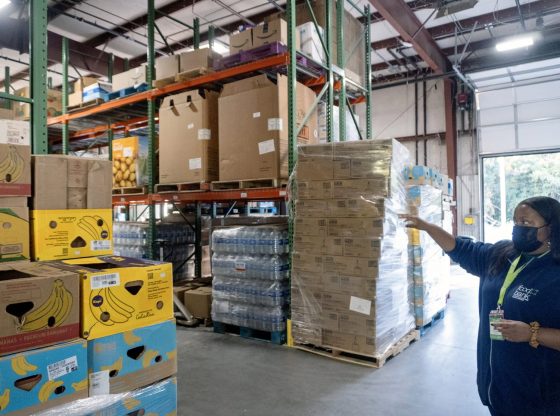
When the Food Bank of Central and Eastern North Carolina began renovating its Sandhills branch in 2023, the nonprofit did not expect the project’s completion to coincide with the threat of a national hunger crisis.
The $1 million overhaul of the Moore County facility, which also serves Lee, Richmond and Scotland counties, was originally meant to address an uptick in food insecurity across the largely rural region.
“We were prepared for the increase in demand for food assistance due to economic factors like the rising cost of living and the fact that wages in the region are not keeping up with that cost,” said Jason Kanawati Stephany, vice president of communications and public policy for Food Bank of Central and Eastern North Carolina. “We were not ready for the largest cut in the history of SNAP grocery support.”
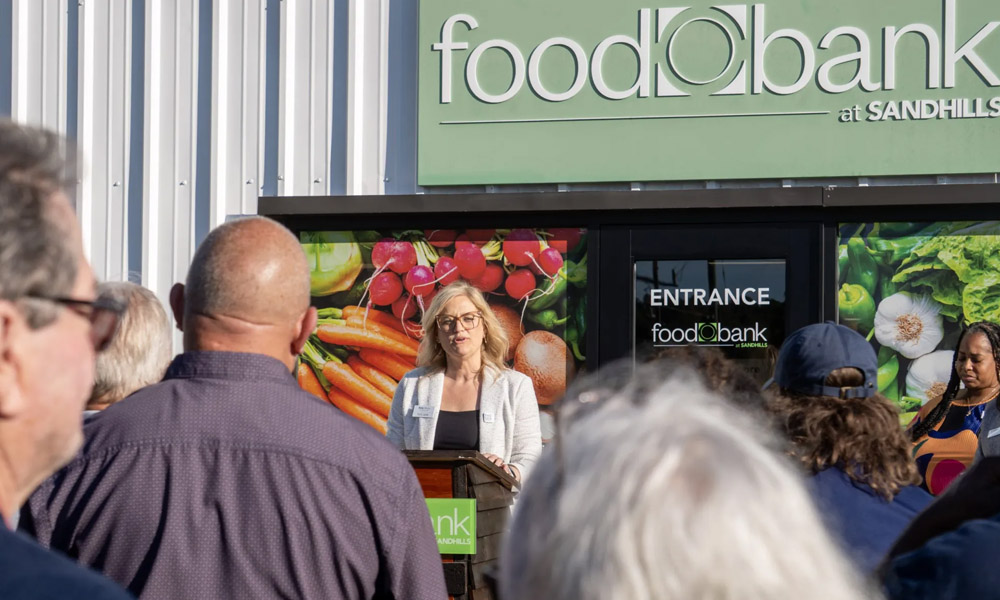
Yet that is the reality Food Bank officials faced as they celebrated the re-opening of the branch — which boasts new offices, an expanded warehouse freezer and other upgrades — with a ribbon cutting on Monday.

The event happened just hours after the Trump administration announced that people participating in the Supplemental Nutrition Assistance Program would receive only half their normal benefits amid the ongoing federal government shutdown.
About 40,000 residents depend on SNAP in the four-county area served by the Sandhills branch. The slashing of their benefits, which were already delayed and may not be issued for several weeks still, means more local families will need help putting food on the table, just as the holidays arrive.
“We know that our community needs us, and so we have to be positioned to support the work that needs to be done,” said Mariah Murrell, chief community impact officer for Food Bank of Central and Eastern North Carolina.
The branch’s work, she added, “matters more than ever — not just as a response, but as a lifeline.”
A well-timed facelift
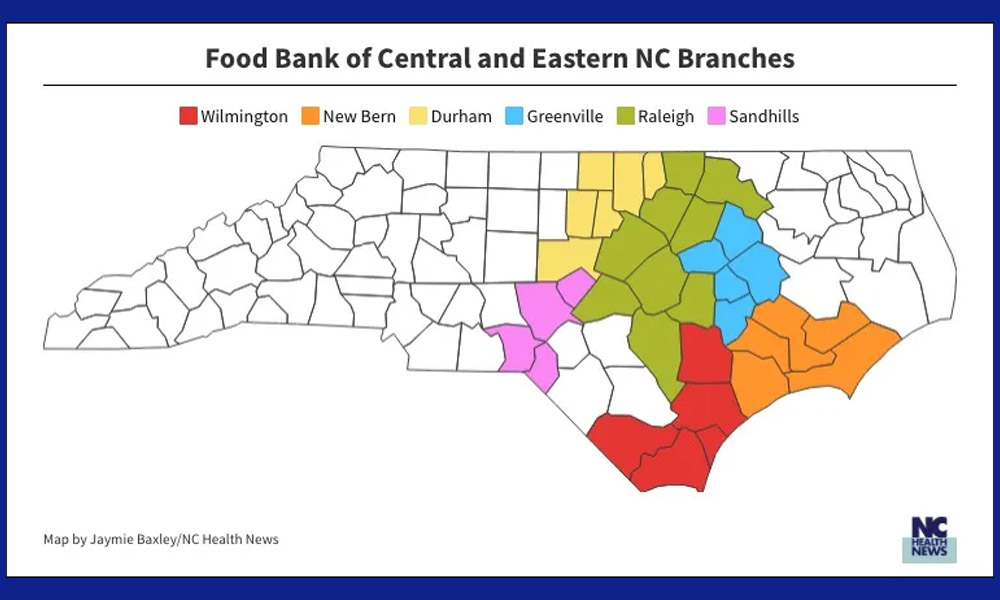
While the disruption in SNAP will be felt across the Food Bank’s regional network of six branches covering 34 counties, the staff at the Sandhills site are at least better equipped to handle a surge in demand than they were two years ago.
The renovation is the first major update the branch has received since 2003, when it was relocated from its former home in nearby Aberdeen to the end of a gravel path off Sandy Avenue in Southern Pines.
Now, a fully paved road leads to a proper parking lot in front of the facility. Inside, the outdated equipment and cramped cubicles that workers made do with for decades have been replaced with modern hardware and actual offices.
“This is my first time having an office with a door,” said Jessica Ledbetter, a network engagement manager who has been with the branch since 2009. “I used to have to try to find a private space if I needed to take a call that needed to be confidential.”
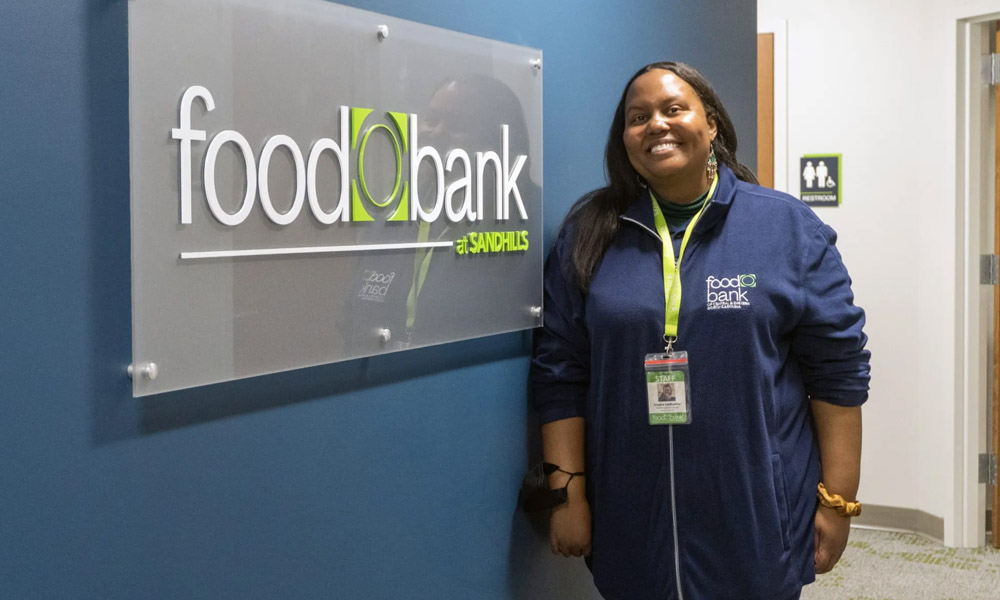
The “most exciting” addition, Ledbetter said, is a larger conference room that can host representatives from the many local organizations that assist the branch with food distribution.
“We had wanted more space to invite our partner agencies for meetings and to have trainings,” she said. “Before, we had to either rent a space or look for an external space to use.”
Another significant upgrade can be found in the facility’s warehouse, where a walk-in cooler has been expanded to hold more meats and produce. About half of all food distributed by the branch is perishable.
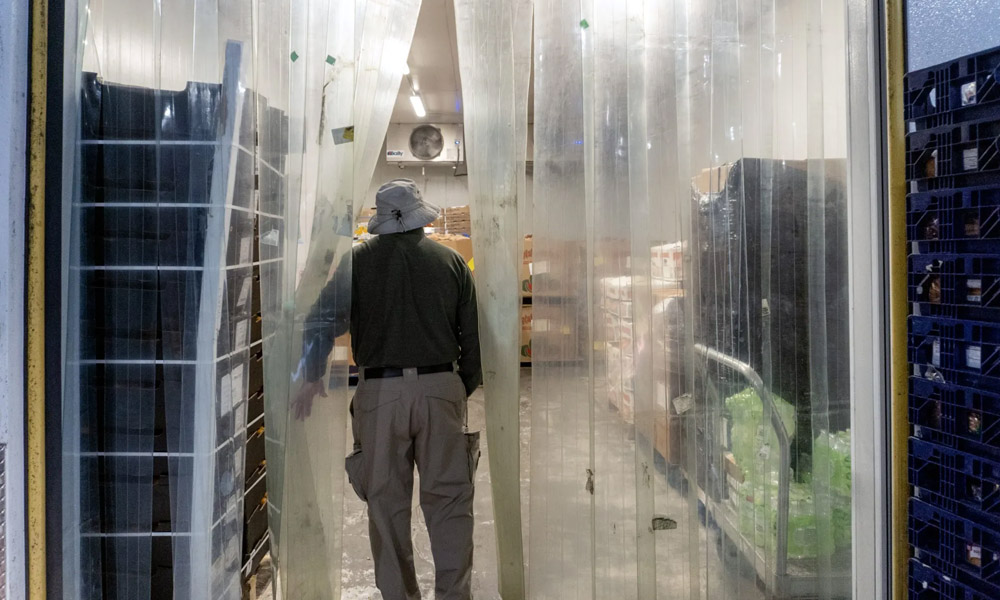
Amy Beros, president and CEO of Food Bank of Central and Eastern North Carolina, called the renovation a “significant investment.”
“The timing is fortunate for us to be able to have this extra capacity to meet the continuing increased demand,” she said.
No substitute for SNAP
Still, Beros said, the upgrades don’t mean the branch can completely fill the gap created by the current shortfall in SNAP.
“For every one meal we provide, SNAP provides nine,” she said. “There’s no way to charity-food-system our way out of those gaps. We can’t fill those gaps, and we were never meant to replace the federal safety net.”
More than 486,420 people are enrolled in SNAP across the Food Bank’s larger network across eastern North Carolina. Those beneficiaries account for nearly 35 percent of the state’s total enrollment in the program.
“We would need to basically more than double the size of our food bank to fill that gap,” Beros said. “It’s just not possible for us. It’s not possible for our partners.”
Stephany, the vice president of communications, said SNAP is the nation’s “first line of defense against hunger” because it “puts money directly into families’ pockets to buy food” — a service the food bank can’t replace.
“Our network is moving mountains to keep food on folks’ tables,” he said. “But even with the incredible community generosity that we benefit from, we can’t make up for these cuts through community support alone.”
Cuts after cuts
The limitations have been compounded by an additional loss of federal dollars that arrived just as demand for food assistance began to grow.
Much of the funding that helped food banks keep pace with rising demand during and after the COVID-19 pandemic has been eliminated. For example, this spring, the Trump administration sunsetted a pandemic-era program that enabled food banks to buy food from local farmers.
“Over the last nine months, we have lost millions of dollars in federal funding to purchase food,” Stephany said. “The resources that we use to meet the rising need have been cut at a time when that need is increasing significantly.”
Stephany, who said he grew up in a food-insecure household and used food stamps to feed himself as a college student, anticipates that SNAP-dependent families will be leaning on his organization for support in the coming weeks.
“We just want to make sure that folks know that food is available right now to all who need it,” he said. “And if you are fortunate enough to be in a position to get involved, whether that’s as a donor or a volunteer, there has never been a more important time to do so.”
People can also help, he said, by reaching out to lawmakers.
“They need to hear from us and know that we can’t afford to let these cuts stand.”
Feature photo: The warehouse of the Food Bank of Central and Eastern North Carolina’s newly renovated branch in the Sandhills. Credit: Jaymie Baxley/NC Health News.
~Written by Jaymie Baxley/NC Health News. Article republished under a Creative Commons license.
North Carolina Health News is an independent, non-partisan, not-for-profit, statewide news organization dedicated to covering all things health care in North Carolina. Visit NCHN at northcarolinahealthnews.org.