
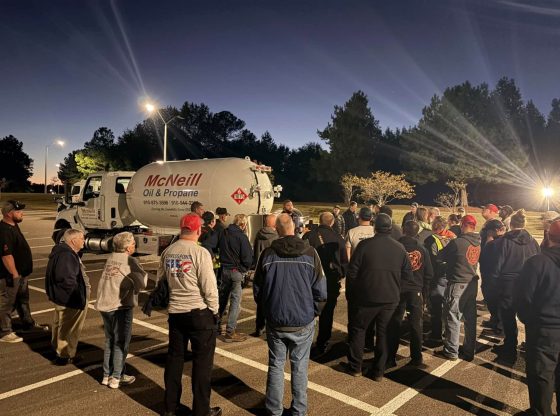
Firefighters from across Moore County recently gathered at Crain’s Creek Middle School for specialized training on responding to propane emergencies.
Cypress Pointe Fire & Rescue hosted the training alongside Fayetteville Fire Department Regional Response Team 3 and McNeill Oil & Propane Co. The session focused on the initial steps firefighters should take when responding to an emergency involving liquefied petroleum gas, commonly known as propane.
Crews reviewed scene operations, equipment, and the gas meters used by regional response team personnel. They also discussed the procedures and safety considerations involved in flaring gas from a damaged propane tank.
Fayetteville is home to one of seven hazardous materials regional response teams in North Carolina. The teams are strategically located throughout the state and can assist when an incident exceeds the capabilities of local emergency responders.
Regional response teams provide technical support, personnel, specialized equipment, and supplies to help manage hazardous materials incidents.
The training helped participating firefighters better understand the risks associated with propane emergencies and how to coordinate with specialized response teams.
“Training like this helps ensure our firefighters understand the hazards associated with propane emergencies and how to work alongside specialized response teams when these incidents occur,” writes Cypress Pointe Fire & Rescue in a Facebook post. “Continuous training and cooperation between departments help us better prepare to protect the communities we serve.”
Departments participating included Cypress Pointe Fire & Rescue, Southern Pines Fire & Rescue, Pinebluff Fire Rescue, Village of Pinehurst Fire Department, Robbins Fire Rescue, Seven Lakes Fire/Rescue, Whispering Pines Fire Rescue Department, Pine Hill Fire Department, and Aberdeen Fire & Rescue.
As colder weather approaches, residents who use propane to heat their homes should take precautions to help prevent emergencies. Have a qualified technician inspect propane appliances and heating systems regularly, keep vents clear of debris, and install carbon monoxide detectors on every level of the home. If you smell gas, leave the area immediately and call 911 and your propane supplier from a safe location. Never attempt to repair a propane leak or damaged tank yourself.
Photo via Cypress Pointe Fire & Rescue.
Abegail Murphy | Assistant Editor
Written by Sandhills Sentinel assistant editor Abegail Murphy. Abegail has been writing for Sandhills Sentinel since 2021.
Want Moore news that matters? Please click here to sign up for the free Sandhills Sentinel e-newsletter.
Follow Sandhills Sentinel: Facebook | X | Instagram | YouTube | TikTok | Threads | Newsletter